Hurricane-proofing Caribbean Homes
The beautiful seas and temperate weather of the Caribbean have attracted tourists for decades. But this is not all they attract. They also create the perfect conditions for heavy storms, high winds, and hurricanes.
Every homeowner, therefore, must be fully aware of how to adequately protect their home against hurricanes to ensure the safety of their family, their tenants, and their property.
Protective measures vary in complexity and cost. While some upgraded materials or installations can be expensive, other options are entirely inexpensive and easy to add, even to already-built houses.
When Nature Becomes Unstoppable: The Hurricane Belt
Hurricanes are known for their powerful winds, which may put serious stress on a home’s structure. These high-speed gusts may damage roofs, windows, and doors if they are not properly reinforced. Understanding the risks can be the first step towards effectively strengthening and protecting your property.
But how are these storms created, and where are they most common?
High winds are triggered by a series of thunderstorms occurring simultaneously, which happens when warm air rises rapidly. Their effects are diminished when storms travel over land; nevertheless, things are very different for tiny islands surrounded by miles and miles of warm sea, entirely at the mercy of shifting winds.
Some countries, due to their location, are more vulnerable since they are in the path of hurricanes. This is what we know as the "hurricane belt," starting from the southeast coast of the US and stretching across the Bahamas, Cuba, Haiti, and the Virgin Islands. Others, like Aruba and Curaçao, rarely experience such fierce weather because they are closer to the mainland.
Hurricanes are also more prevalent during a specific time of year: from June to November.
Protecting Your Home Against Hurricanes
The first thing to clarify is that there are no hurricane-proof houses, only hurricane-resistant ones. No measure, material, technique, reinforced glass, or high-grade tile can be 100% immune to the forces of nature.
Yet every homeowner can take every possible precaution to minimize damage, and here is how.
Your Main Goal When Hurricane-Proofing a House: Protect the Roof
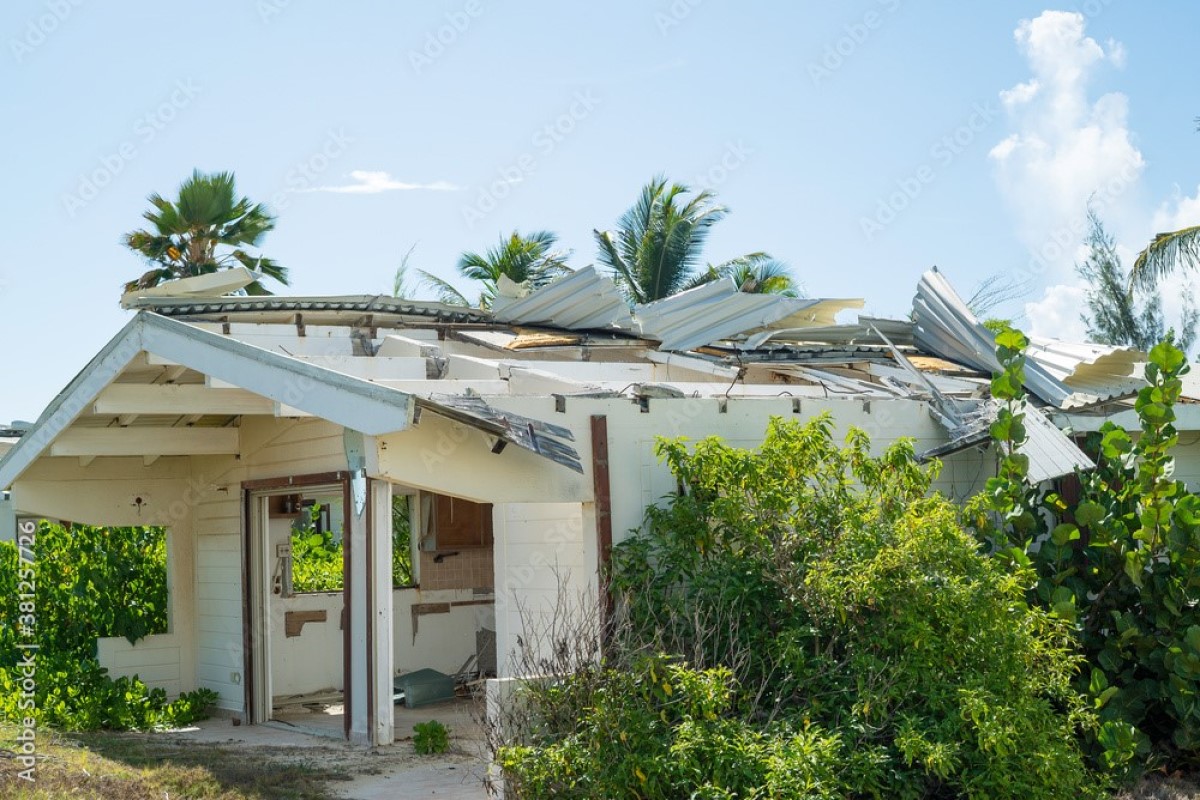
Roof damage is one of the most common and costly issues during a hurricane. As the highest point of the structure, it is the most vulnerable to high winds. It's also what holds everything in the house together. This is why it constitutes your first line of defense and should be treated as such.
How to Secure Your Roof
Install Roof Straps
Installing roof straps will make your roof far less prone to destruction. When these brackets are fitted, connecting the roof trusses to the exterior walls, they disperse wind uplift down to the foundations.
This method is low-cost and straightforward to install, even in already-constructed houses. One simple step can make a significant difference in your home's resilience.
Upgrade the Materials
The more resistant your materials, the more resistant your roof will be. Upgrading may be more expensive and time-consuming than installing straps, but it's worth it for homeowners who are serious about safety.
When stones, broken branches, and all kinds of debris strike your roof, you want them to be as harmless as possible. Metal sheets, concrete tiles, and class 4 shingles are all recommended over wood shakes, which are less robust and have irregular surfaces.
Needless to say, no material can withstand the passage of time. What high winds can't destroy, wear and tear will. Long-term maintenance is therefore another key factor in keeping your roof intact.
Ideally, roofs should be inspected by a professional after every storm, as damage is not always visible. The next storm may not be as forgiving as the previous one on an already-compromised structure.
Keep the Debris Out and Your Loved Ones In: Windows and Doors
Hurricane-Proof Your Windows
The main goal of protecting windows and doors is not so much about shielding the house, but everyone inside it. If a garage door gives way, the sudden surge of water can cause serious damage to furniture, carpets, appliances, and people, and even trigger short circuits.
When it comes to windows, the aim is that, when struck, the glass cracks rather than shatters into flying shards. The greatest danger to people is broken glass exploding inward in the middle of an already chaotic situation.
The best solution is to install shatter resistant glass, specifically designed to withstand strong impacts. It works similarly to a car's windshield: when cracked, the glass stays inside the frame rather than flying in all directions.
The secret lies in multiple panes bonded by durable interlayers that absorb the impact and hold the pieces together. Hurricane-resistant shutters can be a good complement, although they tend to darken the space. They come in both roll-up and permanently installed versions.
Be mindful of Myths and Misinformation
A myth has been circulating for decades suggesting that duct tape is a reliable, homemade way to protect windows. This misconception originated from a 1970s brochure that recommended the practice. Not only is it completely useless, but it can actually increase danger because the glass ends up breaking into larger, sharper, and more hazardous pieces.
A common practice is boarding up windows with plywood. This can provide temporary protection against flying debris and high winds when properly installed, but it is not the most effective long term solution. Also, repeated installation and removal can damage exterior paint or siding.
Homeowners can benefit from planning ahead and also by investing in permanent or reusable solutions. Impact resistant windows or professionally installed hurricane shutters offer superior protection, convenience, and durability.
Get rid of all Potential Threats: Keeping the Surroundings Clean
Constant attention to what lies around your property is more important than you think. Keep trees trimmed and remove all fallen branches and loose objects. Heavy items, when hurled by high winds, become like real missiles, extremely menacing for everything and everyone in their path.
In line with this, it's always a good idea to keep the patio and front yard tidy, and when a storm is forecast, bring all outdoor furniture inside.
It's also important that all electrical appliances and HVAC systems are installed higher on the walls, that is, separated from the floor, so that in the event of flooding, there's no risk of a short circuit.
Speaking of water, another effective measure is to install flood vents. In the event of a flood, these will relieve the hydrostatic pressure on the walls, protect the foundations, and prevent structural collapse. Make sure to research the local requirements for their installation. One of the main ones is that they function in both directions, letting water in and out automatically without any human intervention.
Key hurricane-proof Considerations If You're About to Build
If you are about to build your own home, you have an enormous advantage. You can incorporate many of these measures during construction and make design decisions accordingly.
If possible, opt for a hip roof rather than a gabled roof. Hip roofs have been proven more effective at deflecting wind pressure away from the structure, regardless of which direction the wind comes from. It's all about aerodynamics. Gabled roofs hold up well when wind hits the sides, but when it strikes the gable ends, it can lift the roof like a boat sail.
Go Round and Save Yourself from Trouble
A growing architectural trend has been shown to reduce wind pressure by 30% in rounded houses. The typical rectangular home has two walls much longer than the others. When wind strikes one of those large surfaces, that single wall bears the full force. With a rounded house, however, that force isn't absorbed by one wall, it's deflected around the structure.
A family-owned company from North Carolina, called Deltec, is commercializing this type of construction. According to their lead engineer, their designs have a 99% success rate in major hurricanes and can withstand winds of 190 miles per hour, that is, category 5 hurricanes.
Plan Ahead for the Storm
The main drivers of hurricanes are warm ocean water and moist air and as global warming continues, rising sea surface temperatures in the Caribbean are expected to fuel more extreme hurricanes, with stronger winds and heavier rainfall.
Homeowners should take every measure available to protect both the people and the properties in their care. Actions can be as simple as installing roof straps to upgrading materials, to building an entirely new property under a revolutionary design concept.
Either way, small habits like keeping your yard clean can already make a real difference. Most importantly: don't rely on urban myths. Stay informed, follow weather forecasts, and remember that your roof is your first line of defense. And after every storm, call a specialist to check for concealed damage, unseen holes, or lifted tiles.
Don't sleep on hurricane-proofing. Keep yourself and your loved ones safe!